

Illinois Physician Collaboration
Find a collaborating physician in Illinois
GuardianMD matches nurse practitioners and physician assistants with physicians licensed in Illinois, and supports the agreement and oversight their role requires.
Licensed in Illinois
Agreements built around state requirements
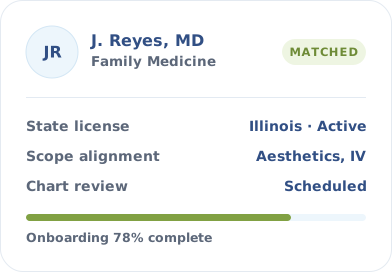
Get matched
Fast physician matching in Illinois
Getting started in Illinois
Everything your Illinois practice needs to get started
Who we serve
Collaboration for every practice type in Illinois
How it works
From the first call to ongoing support
Tell us about your practice
Share your license type, service lines, and where you plan to operate in Illinois
Get matched to a physician
We identify a physician licensed in Illinois whose specialty aligns with the care you deliver.
Review the agreement
Your agreement is built around state requirements and walked through with you before signing.
Stay supported
Coordinated chart reviews, protocol updates, and physician access continue through the platform.
State Resources
Helpful links to Illinois’s licensing boards
Common questions
Collaboration in Illinois
Does an Illinois nurse practitioner need a collaborating physician?
An Illinois NP engaged in clinical practice generally needs a written collaborative agreement unless the NP has obtained full practice authority or qualifies for an applicable facility-based exception. The agreement describes the working relationship, authorized categories of care, and consultation and referral arrangements. GuardianMD helps eligible NPs find Illinois-licensed physicians suited to their services and practice needs. Review Illinois’s written collaborative agreement requirements.
How can an Illinois NP obtain full practice authority?
Qualifying NPs may apply after completing at least 4,000 hours of clinical experience following national certification and at least 250 hours of continuing education or training in their certification area. Required notarized attestations and the applicable state process must be completed. Full practice authority permits practice without a written collaborative agreement within the authorized scope. Separate requirements still apply to certain controlled-substance prescribing. Review Illinois’s full practice authority requirements.
Does full practice authority remove all physician involvement in prescribing?
No. Illinois retains physician-consultation requirements for Schedule II narcotic prescribing and continued benzodiazepine prescribing beyond the statutory supply limit. Required controlled-substance licensing, federal registration, and consultation documentation also apply. This consultation relationship is distinct from the standard written collaborative agreement. Read Illinois’s full practice authority prescribing provisions.
Does an Illinois collaborative agreement need to be filed with the state?
For NPs, the signed written collaborative agreement must be available to IDFPR on request. Separate notices and licensing requirements apply when controlled-substance prescribing authority is delegated. For PAs outside an applicable facility exception, the collaborating physician submits the state’s notice of written collaborative agreement. Additional prescribing and termination notices may apply. Review Illinois’s NP agreement requirements. Find Illinois’s PA agreement and notice forms.
Can I change collaborating physicians if needed?
GuardianMD can help coordinate a transition, subject to eligibility, physician availability, and agreement terms. An APRN required to maintain a collaborative agreement may continue practice for up to 90 days after termination if the statutory conditions are met, including seeking needed collaboration at a local hospital and referring patients whose needs exceed the APRN’s training and experience. This limited transition provision does not grant full practice authority. PA transitions follow separate notice requirements. Review Illinois’s APRN transition provision in Section 65-35.1.
Are Illinois NP and PA collaborative agreements interchangeable?
No. Both may use the term written collaborative agreement, but NPs and PAs are governed by separate practice acts. Agreement content, prescribing authority, notices, and facility exceptions differ. Qualifying facility privileges may allow practice without a standard agreement. The PA exception includes specified hospitals, hospital affiliates, federally qualified health centers, and ambulatory surgical treatment centers; eligibility must be assessed under the applicable statute. Review Illinois’s PA facility-based exception.
What support does GuardianMD provide after matching?
Depending on your provider type, practice, and service plan, support may include agreement documentation, applicable protocols, chart-review workflows, physician communication, renewal support, and organized records through the GuardianMD platform. Services are subject to eligibility and applicable Illinois requirements. Clinical decisions and professional compliance remain the responsibility of the licensed providers.
Last updated: October 5, 2026