Healthcare MSO and CPOM Compliance
Compliance You Can Trust. Guidance You Can Grow With.
GuardianMD provides MSO setup, CPOM compliance, and ongoing management for your practice. We help navigate corporate practice of medicine regulations and set up the legal structure required in your state.

Build and Own Your Healthcare Business — Compliantly
GuardianMD empowers nurse entrepreneurs and non-clinical business owners to launch and operate their own medical business legally and confidently. Through our nationwide network of physicians, we make it possible for non-physician-owned clinics to meet every regulatory requirement and stay fully compliant.
Our proven MSO practice model satisfies CPOM laws while giving you the freedom to build, brand, and grow your business — on your terms.
Dr. Christopher Seitz on Navigating Compliance and Ownership in Healthcare
Dr. Seitz explains how GuardianMD helps nurse practitioners and entrepreneurs launch compliant, physician-supported healthcare businesses through the MSO model.
GuardianMD’s Compliant MSO Model
How Our MSO Model Works
GuardianMD structures your business using a proven MSO (Management Services Organization) framework that separates clinical ownership from business operations.
Your clinic operates the MSO, which manages all non-clinical functions—while a state-licensed physician owns the clinical entity (PC). We handle the formation of both entities, the compliant agreements between them, and the operational workflows needed to keep the structure functioning safely and legally.
Designed for Full CPOM Compliance
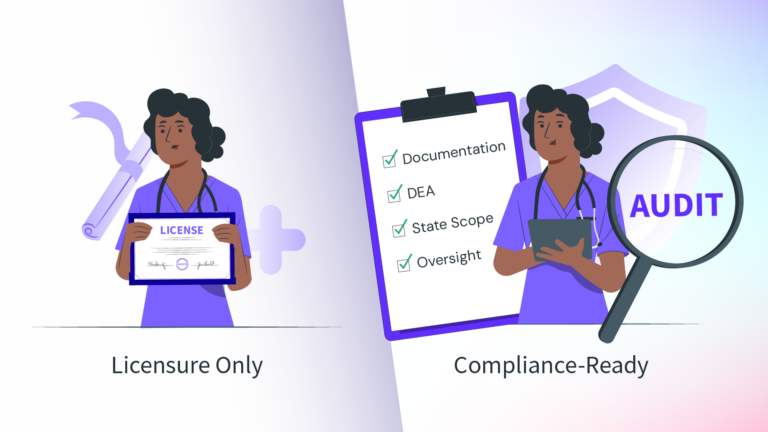
Our MSO model follows strict Corporate Practice of Medicine (CPOM) guidelines in every state. We ensure your ownership structure, financial arrangements, management fees, medical director relationships, and oversight workflows are aligned with state-specific requirements. No gray zones. No handshake deals. Just a defensible, audit-ready structure that protects the clinic, the physician, and the patient.
Built for Nurse Independence
We designed our MSO model so nurse practitioners and RNs can build, own, and scale their businesses without giving up majority ownership or control. Instead of being forced into a 51% physician-ownership model, the MSO allows nurses to own 100% of the business operations while maintaining a properly structured physician-led clinical entity. You retain your autonomy, profitability, and brand identity—while staying fully compliant.
Schedule a call
We look forward to meeting with you!
Fill out the form, and a GuardianMD specialist will email you immediately to find a convenient time to talk.

Why GuardianMD Is the Trusted Choice for Healthcare MSO Solutions
Decades of Healthcare Compliance Experience
Our leadership team brings decades of hands-on experience in clinical operations, regulatory compliance, CPOM structuring, and multi-state healthcare oversight. We understand the complexities nurses and clinic owners face, and we’ve built a system that keeps practices legally protected, operationally sound, and ready for long-term success.

Proven Success Across Multiple States
We’ve structured MSOs and compliant oversight models in all 50 states, each with its own CPOM rules, supervision standards, and ownership restrictions. Our state-specific expertise ensures your practice is built correctly no matter where you operate today—or where you plan to expand tomorrow.
Personalized Approach to Every Practice
No two clinics operate the same way. We tailor each MSO structure to your specialty, service offerings, revenue model, and growth plans. Whether you’re launching a single location or building a regional franchise, we create a compliant operational foundation that aligns with your unique needs.

Transparent Pricing and Ongoing Support
We believe in straightforward pricing with no hidden fees or vague add-ons. Beyond setup, we provide continuous compliance guidance, oversight coordination, physician support, and document updates as laws change. You get a clear investment, dependable support, and an MSO model that keeps your clinic protected year-round.
Looking for a Collaborating Physician?
GuardianMD connects you with licensed collaborating physicians in your state in 7 days or less.
Key Compliance Considerations for Healthcare Businesses
Navigating compliance is one of the biggest challenges for new healthcare practices. From HIPAA requirements to state-specific ownership laws, the details can feel overwhelming — but getting them right from the start protects your license, your reputation, and your business.
GuardianMD helps you meet every compliance standard confidently, so you can focus on patient care while we handle the legal complexity.

Meeting HIPAA Standards From Day One
Patient privacy isn’t just a checkbox — it’s the foundation of every ethical, compliant healthcare business. GuardianMD helps new clinics establish HIPAA-compliant systems and workflows from the very beginning, minimizing your legal risk and protecting your patients’ data.
Our experts stay current on evolving state and federal privacy laws, so you don’t have to. We’ll help you create documentation, policies, and technology safeguards that keep your operations compliant and audit-ready.
A Proven MSO Model That Keeps You Fully Compliant
GuardianMD’s physician-owned PLLCs and PCs are established in every state, ensuring full compliance with corporate practice of medicine (CPOM) laws.
Under this model, your clinic maintains complete ownership of your business as a Managed Services Organization (MSO) while entering a Managed Services Agreement (MSA) with physician-owned state-specific practices. This allows you to operate legally, stay in control of your brand and operations, and grow without fear of regulatory violations.
Need a Medical Director?
We’re here to help! We’ll match you with a licensed physician in your state — fast, compliant, and stress-free.
Frequently Asked Questions
What is the Corporate Practice of Medicine (CPOM)?
Corporate practice of medicine (CPOM) laws prohibit corporations or non-licensed individuals from practicing medicine or employing physicians to provide medical services. This doctrine is designed to ensure that medical decisions are made by licensed healthcare professionals rather than influenced by business interests.
The intent is to protect patients from deceptive behavior that might come with the private ownership of medical corporations.
Can nurses own a healthcare business?
In strict CPOM states, these regulations can make it very difficult for nurses and advanced providers, like NPs and PAs, to own and operate healthcare clinics, such as an IV hydration business or med spa.
Nurse entrepreneurs need to be aware of the specific CPOM regulations in their state and learn how to navigate the legal limitations. In some cases, nurses may need to collaborate with physician partners or find alternative business structures to comply with CPOM laws.
Why do healthcare providers need to comply with CPOM laws?
CPOM laws protect patients by ensuring medical decisions stay under the supervision of licensed physicians. These laws prevent unlicensed individuals or businesses from influencing clinical judgment, prescribing, or treatment planning. For nurse-led or non-physician–owned practices, complying with CPOM is essential to avoid board investigations, legal penalties, and forced shutdowns. A compliant structure keeps clinical control with the physician while allowing the business side to operate efficiently and legally.
How do MSOs help with CPOM compliance?
An MSO (Management Services Organization) separates clinical responsibilities from business operations. The MSO handles administrative, operational, and non-clinical functions, while a physician-owned PC manages all clinical care. This structure ensures clinical decisions remain physician-led—fulfilling CPOM requirements—while allowing nurses, entrepreneurs, and medical spas to own and operate the business side. MSOs provide a safe, scalable foundation for compliance and growth.
Can MSOs operate across multiple states?
Yes. MSOs can operate nationally as long as the clinical entities in each state follow that state’s CPOM rules and physician-ownership requirements. GuardianMD builds multi-state structures that keep operations unified while ensuring each clinical practice is correctly formed, licensed, and compliant. This makes it easier for expanding clinics and franchises to scale safely.
Are MSO and CPOM requirements the same in every state?
No. CPOM laws vary significantly between states. Some require physician ownership of the clinical entity; others allow broader NP autonomy but still mandate oversight or specific agreements. MSO requirements also differ depending on fee structures, delegation limits, and supervision standards. GuardianMD tailors every MSO to state-specific laws to ensure full compliance.
What is required to create a compliant MSO structure?
A compliant MSO requires creating two entities—a physician-owned professional corporation (PC/PLLC) for clinical care and a non-clinical MSO for business operations. It also requires a legally sound Management Services Agreement (MSA), proper fee arrangements, documented oversight workflows, and clear separation of clinical vs. administrative duties. GuardianMD handles the full setup end-to-end.
How long does it take to implement an MSO structure?
Most MSO structures can be set up within 2–4 weeks, depending on the state and the complexity of your services. This includes entity formation, agreement drafting, compliance review, and operational setup. GuardianMD streamlines the process so your practice can launch or transition quickly without sacrificing compliance.
What is a Managed Services Agreement (MSA)?
An MSA defines the relationship between the physician-owned PC and the MSO. It outlines which services the MSO provides—such as staffing, marketing, billing, scheduling, or administrative support—and how the MSO is compensated. A properly drafted MSA is essential for CPOM compliance and ensures the clinic operates legally and efficiently.
What’s the difference between a PLLC and an MSO?
A PLLC (or PC) is the clinical entity, owned by a licensed physician who maintains control over medical decision-making. An MSO is the business entity, owned by the nurse, entrepreneur, or clinic operator. The MSO handles non-clinical functions and contracts with the PLLC through an MSA. Together, they form a compliant CPOM-safe structure.
What are the benefits of an MSO for doctors?
MSOs free physicians from administrative burdens by handling scheduling, operations, HR, marketing, billing, and more. This allows medical directors and supervising physicians to focus solely on clinical oversight. A well-structured MSO also protects physicians from CPOM violations and ensures they have proper documentation, protocols, and support.
How is GuardianMD’s MSO model different from traditional management companies?
Traditional MSOs often use generic agreements or loosely compliant structures. GuardianMD builds state-specific, CPOM-safe MSOs backed by decades of regulatory experience. We support both the clinic and the physician, maintain audit-ready documentation, and update your structure as laws change. It’s not just management—it’s integrated compliance infrastructure.
Does GuardianMD provide MSO services nationwide?
Yes. We build compliant MSO/PC structures in all 50 states and adjust each model to state-specific CPOM laws. Whether you operate one clinic or a multi-state organization, GuardianMD ensures your structure is fully aligned with each state’s regulatory requirements.
What makes GuardianMD’s structure fully CPOM-compliant?
Our MSO model follows strict separation of clinical vs. non-clinical functions, compliant fee arrangements, state-specific ownership requirements, and clearly defined oversight workflows. We build the PC, MSO, and MSA in accordance with your state’s laws and continually maintain compliance through policy updates, documentation support, and physician guidance.
Can GuardianMD help set up a new practice from scratch?
Yes. We can form your PC and MSO, draft compliant agreements, match you with a licensed physician, and create the operational framework needed to launch. From CPOM structuring to medical director placement and compliance workflows, GuardianMD provides a full turnkey setup.
Who owns the MSO in GuardianMD’s model?
In our structure, the nurse practitioner, RN, or non-physician clinic owner retains 100% ownership of the MSO. The physician owns only the clinical PC, preserving CPOM compliance while allowing the nurse or entrepreneur full control over operations, brand, revenue, and growth strategy.
Does GuardianMD track ongoing state regulatory changes for me?
Yes. Our compliance team monitors state board rules, CPOM updates, supervision standards, and regulatory shifts. We update your documentation and provide guidance anytime laws change, ensuring your clinic stays fully compliant without you having to track every regulation.
Can I transition my existing practice into GuardianMD’s MSO model?
Absolutely. We can convert your current structure—whether it’s NP-owned, physician-owned, or an informal partnership—into a compliant MSO/PC model. We handle the restructuring, entity formation, agreements, physician matching, and operational transition while keeping your practice running smoothly.
Can GuardianMD assist with other compliance areas, like HIPAA or billing?
Yes. While MSO formation is a core service, we also support HIPAA compliance, documentation standards, protocol development, Good Faith Exam workflows, medical director oversight, and operational compliance. GuardianMD offers a comprehensive suite of compliance solutions for nurse-led and multi-state healthcare practices.
Healthcare News & Education

How to Structure Your Business to Stay CPOM Compliant
CPOM compliance isn’t just legal theory—it’s how you build a durable, scalable clinic. This guide shows you how to structure a Friendly PC + MSO,

Corporate Practice of Medicine in California: What Every Clinic Owner Needs to Know in 2026
California has some of the nation’s toughest Corporate Practice of Medicine (CPOM) laws — meaning only physicians can own medical practices. For medspas, IV clinics,

What Does a Medical Director Do in IV Hydration, Aesthetics, and Wellness Clinics?
A medical director’s role in IV hydration, aesthetics, and wellness clinics goes far beyond signing paperwork. They oversee clinical safety, ensure compliance with delegation and